Inventory Management: How Much to Order, and When?
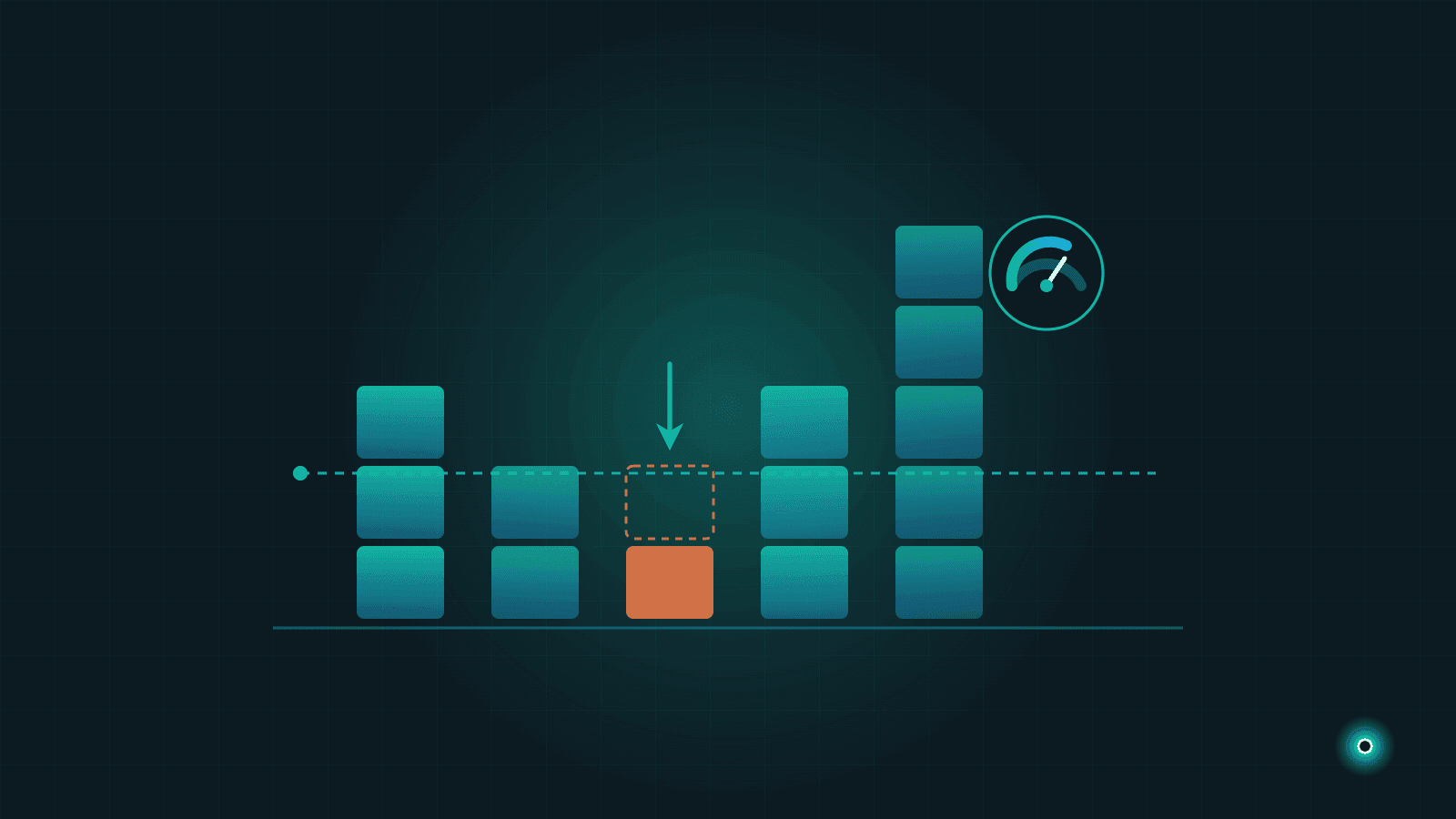
Every box in your warehouse is money you haven't converted to cash. While it sits on the shelf it earns you nothing, takes up space, ages, and sometimes never sells at all. On the other hand, when the shelf is empty the customer leaves empty-handed — and often never asks again. Inventory management is the art of walking the narrow path between these two costs.
Many small businesses try to strike this balance by feel: "I know roughly what we need." That works while the business is small; once the number of products and suppliers grows, the surprises begin — stockouts on your best seller, full shelves of something nobody buys. Yet a few correct concepts and consistent data make this largely predictable.
In this article we'll cover the core concepts of inventory management, how much attention each product deserves, and how to make better decisions with your data — without drowning in jargon.

A Two-Sided Cost: Too Much and Too Little
Inventory decisions are hard because erring in either direction carries a price.
The cost of holding too much stock is usually underestimated because it's invisible: tied-up capital (that money could be working elsewhere), warehouse and shelf space, insurance, the labor of counting, and the risk of spoilage or obsolescence. In seasonal or technology products especially, sitting stock loses value fast.
The cost of holding too little is sneakier: a lost sale never appears in your books, because it simply never happens. And it doesn't end with that one sale — a customer who can't find what they want goes to a competitor and may build the habit there. Add the extra shipping and premium prices you pay for emergency restocking.
Good inventory management doesn't aim to zero out both costs, but to minimize their sum.
Four Concepts You Need to Know
Without diving into complex formulas, four concepts will sharpen your daily decisions:
- Lead time: The time from placing an order to the goods hitting your shelf. It's the foundation of stock decisions, because it determines when you must order.
- Reorder point: The level at which you place a new order. Simply put, it's the amount you expect to sell during the lead time. Knowing it kills the habit of "noticing when we've run out."
- Safety stock: The buffer you keep for the unexpected. Demand can spike or a supplier can be late; safety stock covers both risks. The more uncertainty, the bigger the buffer should be.
- Inventory turnover: How many times your stock is sold and replenished in a period. High turnover means money is cycling quickly; very low turnover points to capital sleeping on the shelf.
Considered together, "when should I order?" stops being a guess and becomes a calculation.
ABC Analysis: You Can't Give Every Product Equal Attention
If you carry hundreds of products, trying to track them all with equal rigor ends in tracking none of them well. That's what ABC analysis is for: you split products into three groups by their contribution to revenue (or profit).
- Group A: The small number of products that generate most of your revenue. Track them frequently, never let them run out, and forecast them carefully.
- Group B: Products of moderate importance. Regular but less frequent checks are enough.
- Group C: Numerous products that contribute little revenue. Set simple rules for these; don't spend your energy here.
This split lets you focus limited time where it makes the most difference. In most businesses a handful of products carry the bulk of revenue — identifying them is the most profitable step in inventory management.
Make Dead Stock Visible
Every warehouse has a corner nobody wants to talk about: items that haven't moved in a long time. Dead stock wastes both money and space, and it grows as long as it goes unnoticed. Even a simple rule helps: regularly list products that haven't sold at all within a set period (say six months).
After that the decision is clear: clear them with a discount, bundle them with another product, or accept the loss and dispose of them. For most businesses the most expensive option is to make no decision and wait.
Does the Stock in Your System Match the Stock on the Shelf?
All of these calculations rest on a single assumption: that the number your system shows is correct. In practice that assumption breaks more often than you'd think. Unrecorded breakage, a mis-scanned barcode, a return that never got entered, a box placed on the wrong shelf — each one widens the gap between the system and the shelf.
The consequences are painful: the system says "in stock," the customer waits, the item can't be found. Or the reverse — goods sitting in the warehouse that the system can't see, so you order more for no reason. This is why stock accuracy is the invisible foundation of inventory management.
The fix isn't one big, exhausting count per year; it's small, regular checks. By counting a handful of products each week — especially Group A items — you can cycle through your entire inventory over the year. This approach doesn't halt operations and catches errors before they grow. And if certain products deviate consistently, you know there's a process problem to fix there.
How to Improve It with Data
Inventory management is, at heart, a forecasting job; the better you forecast, the smaller the buffer you need to hold. That's why forecasting demand through sales forecasting is the natural twin of inventory management: whoever knows demand also knows what to order and when.
In practice, here are the steps:
- Keep stock movements in one place: As long as sales live in one system and the warehouse in another file, nobody knows the true stock level. This is usually solved by moving beyond Excel to a real database.
- Connect sales to stock: Having stock decrease automatically when an order arrives eliminates manual-update errors. ERP, CRM and e-commerce integration closes exactly this gap.
- Set up automatic alerts: Let the system warn you when a product hits its reorder point, instead of noticing by glancing at the shelves.
- Monitor it regularly: When critical-level products, the dead-stock list and turnover are tracked on a dashboard, it becomes a weekly routine.
In manufacturing businesses the real variable behind stock movement is the line itself: the longer the stoppages, the larger the work in progress; the higher the scrap, the greater the material consumption. How to measure both is covered in production monitoring and OEE.
Let's Bring Your Inventory Under Control
Inventory management is far more than tidying your warehouse: it directly affects your cash flow, customer satisfaction and profitability. Set up well, you're left with neither money sleeping on shelves nor sales you wish you could have made. At Lumethis we make this predictable — from consolidating your stock data in one place to building reorder alerts and monitoring dashboards. If you'd like to talk about where to start, get in touch or explore our data and software services.
Need help with this topic?
Contact Us