Moving to the E-Ledger: Who Must, and How to Prepare
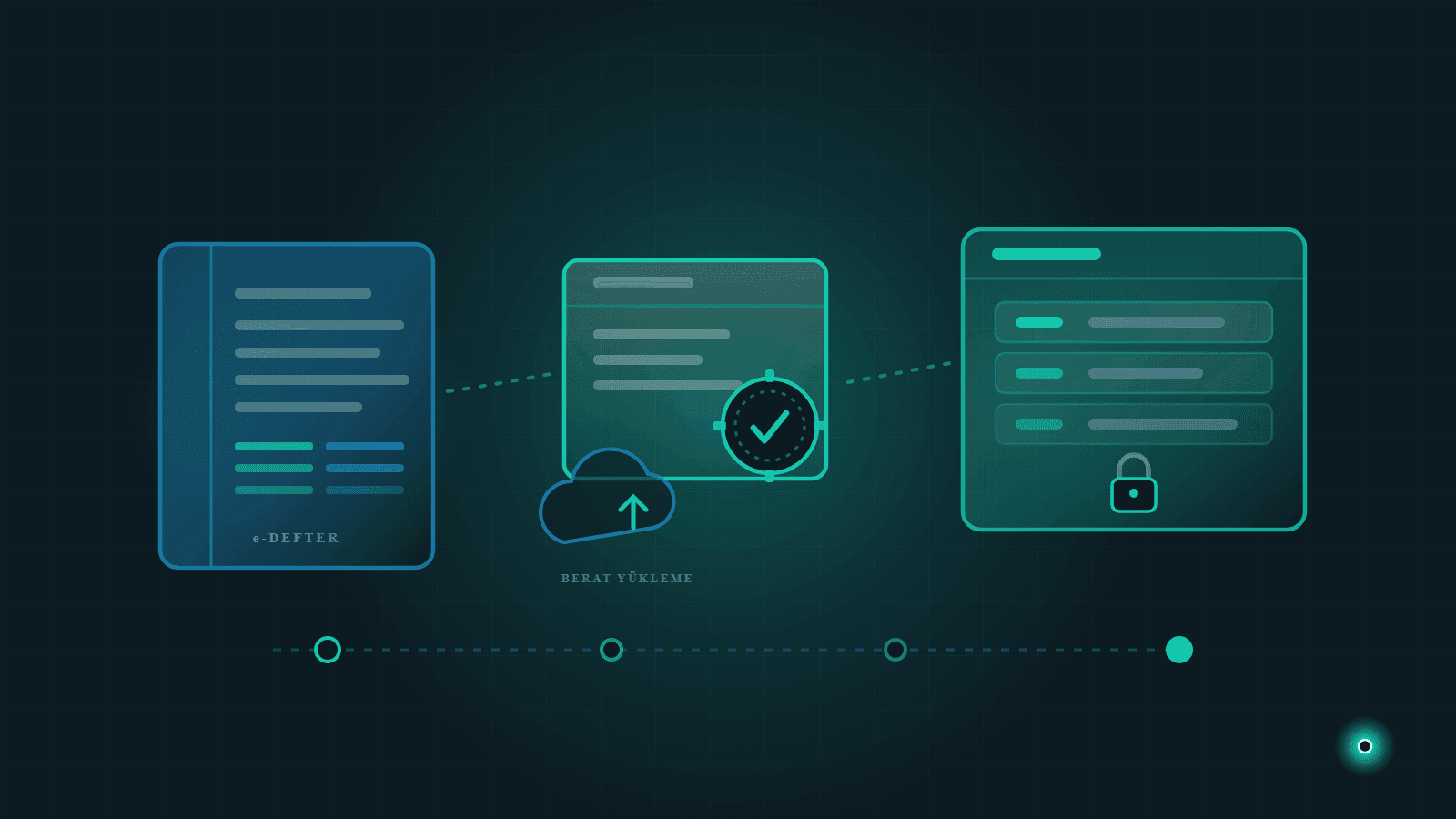
One day your accountant says "we are moving to the e-ledger next year", and the subject closes there. Then January arrives, the first attestation upload gets tight, the order of past records does not hold, and the whole thing suddenly becomes urgent.
E-invoicing was about documents: the format of the invoice you issue changed. The e-ledger changes accounting itself — your journal and general ledger are no longer printed and notarised; they are produced electronically, signed, and their attestation files are uploaded to the revenue administration.
This article suggests a practical order for working out whether you are in scope and getting ready before year-end.
This article is for general information and is not financial or legal advice. Scope, thresholds and dates change with each communiqué. For your own situation, rely on the current text published by the revenue administration and on your financial adviser.
What exactly is an e-ledger?
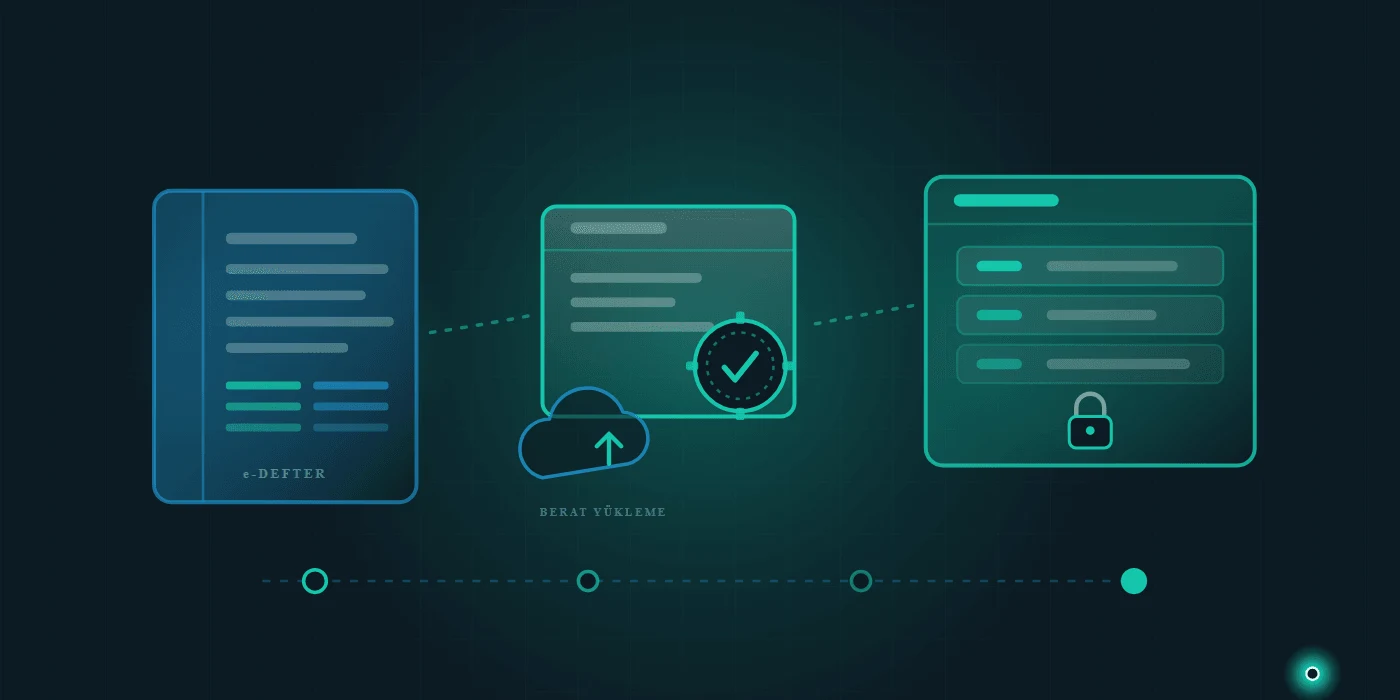
Keeping the journal and general ledger electronically, signing them with a fiscal seal or electronic signature, and uploading an attestation file for each period to the revenue administration's system. The attestation is a sealed summary proving the ledger has not changed since that period.
Three things change in practice:
- Notarisation disappears: electronic attestation upload replaces it.
- The calendar hardens: attestations must be uploaded periodically and on time.
- Archiving stays with you: keeping the ledger files and attestations for the prescribed period, and producing them on request, is your obligation.
Who is in scope?
Scope arrives through two separate routes:
1. How you keep your books. Taxpayers on the balance-sheet basis were brought into mandatory e-ledger use; that rule arrived with an amending communiqué that entered into force on 8 November 2024.
2. A turnover threshold. Taxpayers exceeding the defined gross sales threshold enter scope at the start of the second year following the year in which it was exceeded. That is why the transition date is 1 January 2026 for one business and 1 January 2027 for another.
We are deliberately not printing the current threshold here — it changes with each communiqué, and a wrong number is expensive. One question to your financial adviser settles it: "Given my last two fiscal periods, which year brings me into scope?"
There is also an indirect route: already being on e-invoicing. Most businesses inside the e-document scope end up inside the e-ledger scope as turnover grows. If you have not made the e-invoicing move yet, start with the e-invoicing transition guide.
What does the transition require?
Technically the list is short:
- A fiscal seal (legal entities) or electronic signature (individuals). Obtained through the public certification authority; applications take time, so this is not left to the last week.
- Compliant software or an integrator. The solution that produces your ledgers in the prescribed format and uploads the attestations. On keeping it in-house versus buying it as a service, see cloud versus on-premise.
- Registration and activation. You cannot produce ledgers before enrolling in the system.
- An archiving plan. Files and attestations will be kept for years; where, how many copies and who can reach them should have a written answer.
The hard part is data order, not technology
What actually trips businesses up is neither the seal nor the software. It is this:
- A messy chart of accounts. Accounts opened "temporarily" years ago, the same transaction posted to two different accounts, description fields left blank. An electronic ledger makes that mess more visible.
- A gap between operational and statutory accounting. If sales, collections and stock live in a separate program and the transfer is manual, the same corrections repeat every month.
- Document-to-entry matching. The invoice is recorded but its source cannot be found; that is exactly where production requests hurt.
These are data quality problems, and the repair order we describe in why data quality matters applies here too: first capture the record in the right place, then automate.
A plan through to year-end
A practical four-month sequence from September to December:
September — scope and decision. With your financial adviser, settle whether you are in scope and on which date you enter. If you are, choose the type of solution (a module in your own software, an integrator service, or your accountant's system).
October — seal and infrastructure. File the fiscal seal application, complete the software or integrator contract, open the registration. In the same month, review your chart of accounts.
November — trial and integration. Automate the transfer between operational and statutory accounting; list the points where manual entry remains. Run one full month end-to-end as a rehearsal.
December — closing preparation. Close open accounts, put the stock count in the calendar, write down who uploads the first attestation and when. The only way to avoid surprises in January is to rehearse in December.
Five questions for your accountant
If you want to close the subject in a single meeting, here is the agenda:
- Which date brings me into scope? Given my last two fiscal periods, which year makes this mandatory?
- Who will produce the ledgers? Your system, a module in our software, or an integrator?
- Who uploads the attestation, and on what day? Put a name and a date in writing; "we will handle it" is not a plan.
- Where will the files be kept? How many copies, on what medium, for how long?
- What should we fix in the chart of accounts? Which accounts need simplifying before the move?
The fifth question saves the most time. Clearing duplicate records out of customer and account lists belongs to this stage too — and AI can help with exactly that kind of messy list; we covered how to ask, with templates, in writing better AI prompts at work.
Three common mistakes
1. Leaving everything to the accountant. The obligation belongs to the taxpayer. Uploading the attestation on time, keeping the files and being able to produce them is your responsibility — your accountant runs the work, not the risk.
2. Trusting a single copy. "It sits with the integrator" is not a sufficient answer. At least one copy should be with you, reachable and backed up regularly; we covered how to set that up in data security and backup.
3. Not treating the move as an integration opportunity. If you are changing systems anyway, this is the cheapest moment to discuss operational accounting, statutory accounting and stock together. ERP, CRM and e-commerce integration gives the anatomy of that setup.
Conclusion: a preparation problem, not a date problem
Beyond compliance, the e-ledger imposes order. The good news: for a business that already has that order, the move is a few weeks of work; for one that does not, the move is the moment when every postponed piece of disorder arrives with a single invoice.
If you would like us to automate the transfer between your operational and statutory accounting, or to get your chart of accounts and data flow ready for the move, get in touch; to see how we work, take a look at our services.
Frequently Asked Questions
- Who does the e-ledger obligation cover?
- Scope arrives two ways: taxpayers keeping books on the balance-sheet basis were brought into mandatory e-ledger use by an amending communiqué that took effect on 8 November 2024; separately, those exceeding the defined gross sales threshold enter scope at the start of the second year following the year it was exceeded. So the date is 1 January 2026 for one business and 1 January 2027 for another. Because thresholds change with each communiqué, rely on the revenue administration's current text and your financial adviser.
- What is the difference between the e-ledger and e-invoicing?
- E-invoicing is a document application: it covers issuing and transmitting your invoice electronically. The e-ledger concerns the accounting records themselves; the journal and general ledger are produced electronically, signed with a fiscal seal or e-signature, and periodic attestation files are uploaded to the revenue administration. E-invoicing changes document flow; the e-ledger changes how books are kept and archived.
- What do you need for the transition?
- Four things: a fiscal seal for legal entities or an electronic signature for individuals, software or an integrator that can produce compliant ledgers and upload attestations, registration and activation with the revenue administration, and an archiving plan. The seal application takes time, so it should not be left to the final week. The real difficulty, though, is not technical — it is the order of your chart of accounts and the transfer between operational and statutory accounting.
- Who is responsible for archiving the e-ledger files?
- The obligation belongs to the taxpayer. Keeping ledger and attestation files for the prescribed period and being able to produce them on request is your responsibility; your accountant or integrator runs the work but does not carry the risk. So "it sits with the integrator" is not a sufficient answer: at least one copy should be with you, reachable and backed up regularly.
Need help with this topic?
Contact Us