Year-End Inventory Count Process: A Practical Guide for SMEs
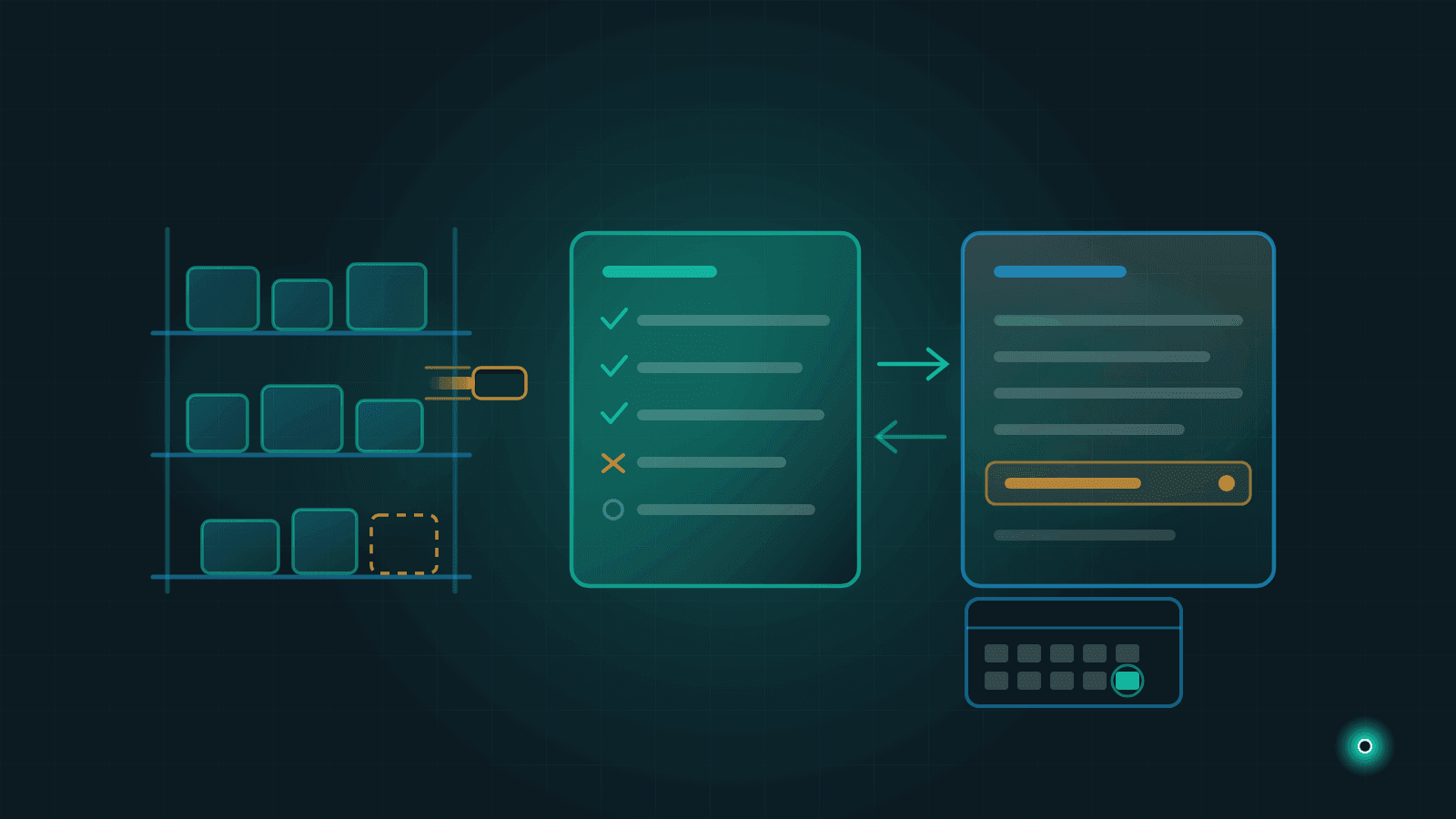
The year-end inventory count usually lands in the busiest week of the year: December is busy, the team is tired, and it gets planned as "something we'll finish in a day." Its quality is decided not on count day but in the plan built weeks earlier.
This article treats the once-a-year count as an operation: team setup, cut-off rules, blind counting, variance thresholds and reconciliation. Day-to-day stock discipline is covered in our inventory management guide.
One boundary up front: everything here concerns process and data. How entries are booked, and what a variance means for tax, belongs to your certified accountant.
Why treat the year-end count as its own project?
Article 186 of Turkey's Tax Procedure Law (VUK) defines an inventory as counting, measuring, weighing and valuing assets, receivables and liabilities at the founding of the business and at the end of every accounting period, as of the balance sheet date — hence counting at least once a year.
Note the wording: the trigger is the end of the accounting period, not the calendar year. On a standard period that is 31 December; otherwise your count date is your own period end, and every calendar reference below should be read against it. The Revenue Administration's inventory-ledger announcements cover special accounting periods explicitly, and taxpayers on one apply from the month their period starts.
Turkish practice calls this "off-book inventory": counting what is there without first consulting the ledger. Comparing the two on one day is why the count needs its own team, calendar and decision rules.
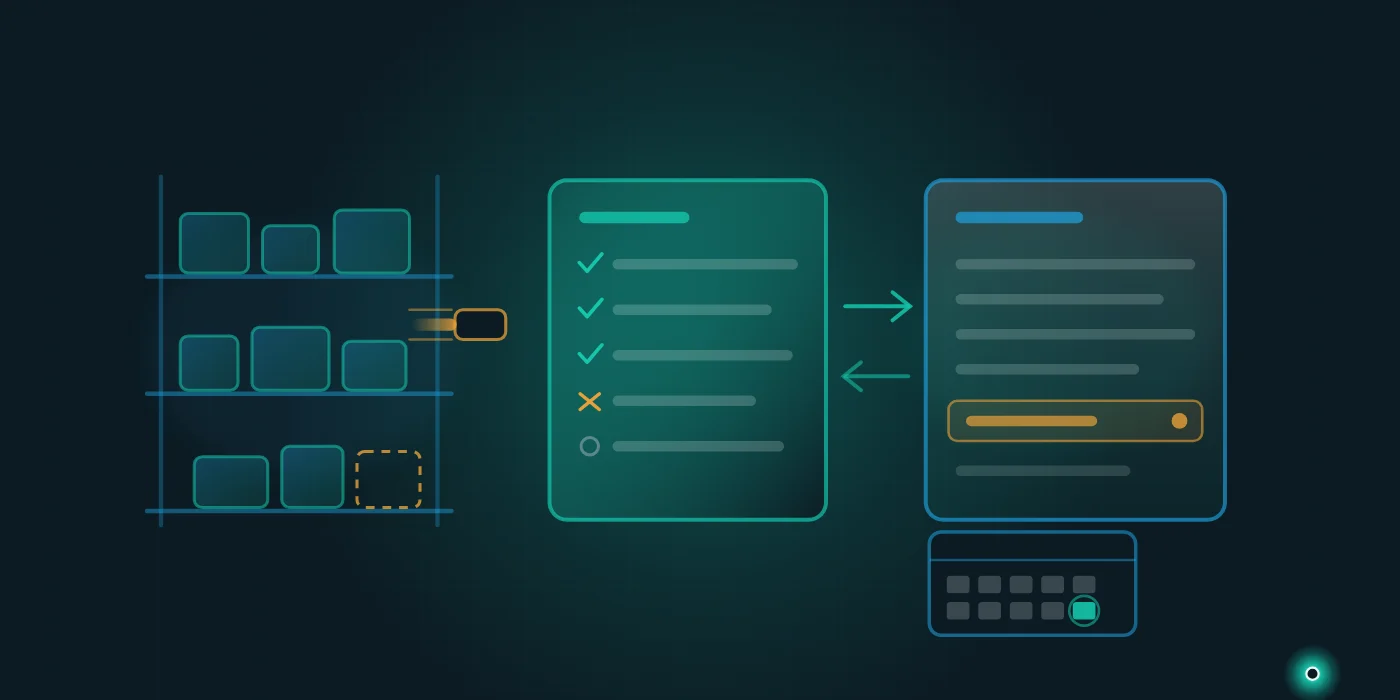
Building the count plan in October and November
A usable plan answers four questions in writing:
- Who counts — pairs from outside the zone's day-to-day owner?
- When — which date and hour?
- Do shipping and receiving stop during the count?
- Who decides when a variance appears?
Someone counting their own area is reluctant to find a shortfall — a design problem, not a trust problem.
The cut-off decision has to be written down. If shipping and receiving do not stop, every dispatch note and slip issued after the cut-off goes into a separate folder, applied to the result by hand. Goods that move while people are counting are a typical source of a post-count variance.
What do blind counting and recounts actually achieve?
In a blind count the sheet hides the system quantity: the counter sees the item code, description and unit of measure, and fills in the quantity field. Anyone who sees the expected number tends to confirm it, especially late in the day.
A recount means a second, independent team recounts the items where a variance appeared; without it, measurement error cannot be told from real stock loss.
Which variances trigger a recount is the company's own call, and it needs saying plainly: Turkish tax legislation sets no variance tolerance and no count-variance threshold. A threshold is an internal control choice, not a legal limit; define it as a percentage and an absolute quantity, because percentages mislead on low-volume, high-value items.
What happens when a variance appears?
The Istanbul Chamber of Sworn-in Certified Public Accountants (Istanbul YMM Odası) describes the step in its 10.12.2025 presentation on 2025 period-end procedures and 2026 tax-period reminders: physical balances of cash and stock are compared with recorded balances, variances are investigated, and a correcting entry is prepared with VAT taken into account.
Variances are not written straight to income or expense. Until the cause is found, shortfalls sit in account 197 (Count and Receipt Shortages) and overages in 397 (Count and Receipt Overages) of the Turkish uniform chart of accounts — temporary accounts. A shortfall that stays unexplained is closed out to 689, Other Extraordinary Expenses and Losses.
In general, a count overage increases equity and is recognised as income, while an unexplained shortfall cannot reduce the tax base and is treated as a non-deductible expense. Where goods have perished, Article 30/c of the VAT Law requires the input VAT deducted on them to be reversed. But the line between perished goods, wastage, theft and natural disaster depends on the facts, so work your case through with your accountant.
Reconciling stock data with the ledger
Post-count reconciliation has two layers, and the second is easy to skip. Quantity reconciliation aligns the physical result with the stock module's units; value reconciliation compares that module's total stock value with the general ledger's stock accounts. Quantities matching while values do not is common, because costing method, import charges, exchange differences and discounts get recorded on the two sides at different times.
Run this monthly rather than annually and the year-end count becomes a verification instead of archaeology. The problem usually sits in data entry — which fields are mandatory, which code maps to which item, whether one product sits on two cards — concrete versions of the question in why data quality matters.
Variances usually have a data root cause
The causes repeat from one year to the next:
- manual or barcode-free goods receipts;
- unit confusion, where pieces, kilograms and cases share one item card;
- production consumption posted days late;
- return flows that never reach the system;
- several locations represented by a single stock record.
If you manufacture, recording consumption and scrap close to real time shrinks the variance directly, as our production monitoring and OEE guide describes. Short and over deliveries belong to supplier management and procurement analytics.
If stock still lives in spreadsheets, diagnosing a variance is close to impossible: nothing records who changed what and when. Moving beyond spreadsheets closes that gap, and choosing a business intelligence tool covers comparing results across years.
Is the electronic inventory ledger mandatory, and how does its calendar work?
Since 01.01.2026 the inventory ledger may be kept electronically in Turkey, but only by what Turkish tax law calls first-class traders — businesses keeping full double-entry books on the balance sheet basis — that are already inside e-Defter, Turkey's electronic bookkeeping system. And it is optional: no obligation has been introduced, though the Ministry may impose one on specific groups later. The basis is General Communiqué on Electronic Ledgers No. 6 (Official Gazette, 31.12.2024), effective for the inventory ledger from 1/1/2025.
Notary certification is replaced by two berats — approval certificates filed with the tax administration — one at period opening, one at closing. The 31.12.2026 ledger and its berat go to the Revenue Administration by the 10th of the month after the return is filed for income taxpayers, and the 14th for other taxpayers, including corporate ones; confirm which applies to you. Its 06.05.2026 announcement rules out any monthly or quarterly upload option — one rule for everyone keeping the ledger electronically — and makes these uploads systemically independent of journal and general ledger uploads.
Two planning points: the compliant software for creating, signing and uploading the inventory ledger must be the one used for the journal and general ledgers — relevant if your stock module sits elsewhere — and the consent form or intermediary agreement you already signed covers it.
Applications go through the Digital Tax Office as the "Envanter Defteri Başvuru Dilekçesi", announced on 13.10.2025; the "Envanter Defteri İptal Talep Dilekçesi", for taxpayers who applied in error, came with the 25.05.2026 announcement, and cancellation runs only through it. Confirm scope and deadlines on edefter.gov.tr and with your accountant; for e-Defter generally, see our e-ledger transition guide.
What to do on Monday morning
Three things are enough this week:
- announce the count date and cut-off moment in writing;
- build count teams separately from zone owners;
- run a trial reconciliation between the stock module and the ledger's stock accounts as of end-September.
The trial surfaces variance types that would otherwise appear in December.
On the electronic inventory ledger there is no rush: 2026 is the option's first year, the 01.01.2026 opening berat deadline has passed, and the next entry point is 01.01.2027.
Finding the cause of a variance is a data problem more than a bookkeeping one: clean item cards, a barcode scanned at the right step, an unbroken flow between systems. If that is where you need support, see our services or get in touch.
This article is not legal or tax advice. Decisions about your own situation belong with your certified public accountant (SMMM) or sworn-in certified public accountant (YMM), the two titles that sign off on these matters in Turkey; take current deadlines and scope from edefter.gov.tr and the Digital Tax Office.
Frequently Asked Questions
- When is the year-end inventory count performed in Turkey?
- Article 186 of the Turkish Tax Procedure Law requires an inventory to be drawn up at the founding of the business and at the end of every accounting period, as of the balance sheet date. For companies on a standard period that means 31 December; companies on a special accounting period use their own period end. The physical count usually happens in December, but planning it in October and November makes it far easier.
- What should you do when a stock count variance appears?
- A variance is not written straight to income or expense; the cause is investigated first. Until it is found, shortfalls are held in account 197 and overages in account 397 of the Turkish uniform chart of accounts, and a shortfall that stays unexplained is closed to account 689, Other Extraordinary Expenses and Losses. Because the tax treatment depends on the facts, work the correction through with your certified accountant.
- Is the electronic inventory ledger mandatory in Turkey?
- No. Since 01.01.2026, first-class traders who keep books on the balance sheet basis and are already in the e-Defter application may keep the inventory ledger electronically on an optional basis. No obligation has been introduced, although the Ministry retains the authority to impose one on specific groups in the future. Check scope and deadlines on edefter.gov.tr and with your accountant.
- What is a blind count and is it necessary?
- In a blind count the count sheet hides the system quantity: the counter sees only the item code, description and unit of measure, and fills in the quantity field. The point is to remove the tendency to confirm an expected number rather than report what is actually there. It is not a legal requirement, but it is the most practical way to keep the count independent, and it works best combined with a recount on items where a variance appears.
Need help with this topic?
Contact Us